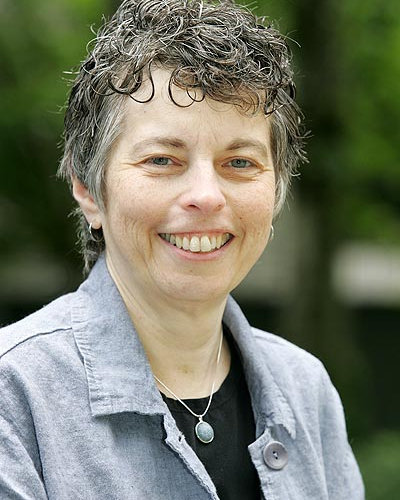
Dr. Rebecca T. Alpert Oral History
Interview
Interview with Sally Benson Alsher on February 26, 1999.
The original recording of this interview and the transcript are located in the Urban Archives at the Samuel Paley Library at Temple University in Philadelphia, Pennsylvania, which graciously gave permission to display digital copies of them on this website. Permission from the Urban Archives must be obtained before reproducing any portion of this interview or transcript.
Biography
Rebecca Trachtenberg Alpert was born to a non-observant Jewish family in Brooklyn, New York in April, 1950. She grew up in Brooklyn, attended synagogue, and absorbed Jewish culture from Brooklyn's civic life. She lived with her parents while she studied religion at Barnard College. To enlarge her experience, she spent her junior year in Israel and returned interested in the Reconstructionist movement as it was then evolving. With encouragement from Elaine Pagels, Alpert decided to enter the Reconstructionist Rabinical College (RRC) in Philadelphia, its third woman candidate. There she met and married fellow student Joel Alpert. She graduated from RRC in 1976 and completed a doctorate in Religion at Temple in 1978. After graduation she was active in the Philadelphia communities and she began to teach as an adjunct and work as a rabbi with numerous Reconstructionist congregations across the United States. She worked in an administrative capacity at RRC as the Dean of Students until 1987.
 Rebecca had two children with Joel, a daughter Lynn in 1982 and son Avi in 1984. In 1986, Rebecca came out as a lesbian; she and Joel divorced on friendly terms, and Rebecca became partners with Christie Balka. At that time, but not specifically because of coming out, her relationship with RRC ruptured. From 1988-1991 she was the Director of Adult Programs at Temple University, and in 1992, she became the Director of the Women's Studies Program at Temple University. In 1997, she became a member of its Religion and Women's Studies faculty, where she currently teaches courses on American religion, religion and sexuality, lesbian and gay lives, and race and gender. Concurrently, she has been active with the American Academy of Religion, the Women's Law Project, and the Family Planning Council of Southeastern Pennsylvania. She was also the co-chair of the Mayor's Commission on Sexual Minorities in Philadelphia under the Rendell administration.
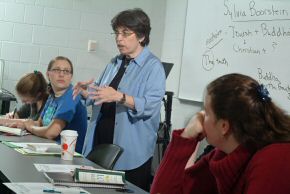 Dr. Alpert is Professor of Religion and Women's Studies at Temple University. She is the co-author (with Jacob Staub) of Exploring Judaism: A Reconstructionist Approach (1985; rev.ed., 2000), author of Like Bread on the Seder Plate: Jewish Lesbians and the Transformation of Tradition published by Columbia University Press (1997), editor of Voices of the Religious Left: A Contemporary Sourcebook for Temple University Press (2000) and co-editor (with Sue Elwell and Shirley Idelson) of Lesbian Rabbis: The First Generation published by Rutgers University Press in 2001. She has written numerous articles on Jewish medical ethics and contemporary Jewish life, published in Tikkun, Judaism, Shofar , and The Journal of American Ethnic History. She published Out of Left Field: Jews and Black Baseball (Oxford University Press) in 2011. In October 2014, Alpert was appointed as Associate dean for Academic Affairs of the College of Liberal Arts at Temple. Her next book, Religion and Sports: An Introduction and Case Studies, is scheduled to be published by Columbia University Press in May 2015.
(This biographical statement provided by Rebecca Alpert.)
Biography Date: June 2003; rev. 2016
Additional Resources
Profiles:
Tags
Jewish (Reconstructionist) | Author/editor | Theology | Pennsylvania | Philadelphia | Alpert, Rebecca
Citation
“Dr. Rebecca T. Alpert | Oral History”, LGBTQ Religious Archives Network, accessed April 26, 2024, https://lgbtqreligiousarchives.org/oral-histories/rebecca-t-alpert.