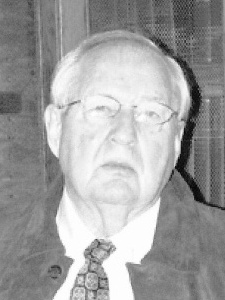
Dr. Ted McIlvenna
Biography
The Rev. Dr. Robert Theodore McIlvenna was born on March 15, 1932, in Epping, New Hampshire. At an early age, he moved with his family to the Pacific Northwest where his father, an itinerant Methodist minister, was a missionary to American Indians. McIlvenna started college at Millsaps College in Jackson, Mississippi, on an athletic scholarship. After deciding to forego sports, he returned to Oregon and Williamette College. Upon completing a B.A. degree in sociology and philosophy in 1954, he was recruited to attend theological school under a new Methodist program that selected persons of “special creative ability” to be trained to serve the church.
After weighing career options as a YMCA executive, a safety engineer for the state government, a professional baseball player, a physical therapist, or an actor-singer, McIlvenna headed to Garrett Biblical Institute in Evanston, Illinois. After an uncomfortable year in that traditional Christian environment, he went to Europe to study systematic theology and philosophy of religion at the University of Edinburgh and University of Florence. During this time he also became an expert in art history. While in Europe he met and married Winnie Ostergaard Sorensen from Denmark.
Upon his return to the U.S. in 1957, McIlvenna was sent to the Pacific School of Religion in Berkeley, California, in order to obtain certification for ordination as a Methodist minister. He became the pastor of Wesley Methodist Church in Hayward, California, in 1958. Because of his interest and expertise in social design, McIlvenna was recruited by the Rev. Lewis Durham to join the staff of the Glide Foundation in downtown San Francisco in 1963. At Glide he staffed the Young Adult Project where he developed programs to reach out and meet the needs of young urban adults.
In his community outreach around Glide Church, McIlvenna became acquainted with a number of homosexual persons and witnessed the violence and persecution they often faced. He also got to know the leaders of a few organizations that served the needs of gay and lesbian persons. In his efforts to help church leaders understand homosexuality, McIlvenna secured the sponsorship of two national Methodist agencies to convene a consultation of 30 clergy and homosexual persons from May 31 to June 2, 1964, at the White Memorial Retreat Center in Mill Valley, California.
The positive results of this retreat led the San Francisco participants–both heterosexual clergy and homosexual activists–to organize the Council on Religion and the Homosexual (CRH). McIlvenna became the first president and driving force behind CRH in its initial period of development. CRH quickly attained a high level of visibility–locally and nationally–because of its unique design as a coalition of religious and homosexual leaders.
McIlvenna moved to Nashville in 1966 to provide leadership for a National Young Adult Project for the Methodist Church. In his role as Director of Project Development there, he was a key organizer and convener of the international Consultation on Church, Society and the Homosexual in London, England, in August 1966.
Indicative of his growing interest in designing educational experiences dealing with human sexuality, McIlvenna returned to San Francisco in 1968 to become co-director of the National Sex and Drug Forum. In 1976, he helped organize and became the first president of the Institute for Advanced Study of Human Sexuality, where he has continued to work as professor of forensic sexology.
Dr. McIlvenna has served as a consultant to several foundations in developing programs and structures for alternative funding for voluntary organizations. He has taught and lectured at many colleges and graduate schools, in addition to speaking at conferences. He has written numerous journal articles and authored seventeen and co-authored eight books. He has produced over 100 films and videos, mostly about sex education. He has also received special awards for several social projects that he designed.
In 1999, McIlvenna moved into retired status as a United Methodist clergy. He is currently the curator of the Exodus Trust International Archives of the Erotic Arts.
Mcilvenna's death was announced on August 23, 2018 by the Erotic Heritage Museum in Las Vegas of which he was co-founder (see below).
(This statement written by Mark Bowman from an interview with Dr. McIlvenna on January 4, 2005, and a curriculum vitae and other biographical materials provided.)
Biography Date: March, 2005
Additional Resources
Dr. McIlvenna is featured in this KRON-TV Assignment Four 1963 documentary on the migration of single girls into San Francisco: https://diva.sfsu.edu/collections/sfbatv/bundles/210735
The Erotic Heritage Museum released this obituary for Dr. McIlvenna:
http://lgbtqreligiousarchives.org/media/profile/ted-mcilvenna/Ted%20McIlvenna%20obituary.pdf
Profiles:
Tags
Methodist (UMC, United Methodist Church) | Council on Religion and the Homosexual | Glide Memorial United Methodist Church | Ally | Clergy Activist | New Year's Ball (San Francisco) | California | San Francisco | McIlvenna, Ted | EXHIBIT Council on Religion and the Homosexual | EXHIBIT The UMC Gay Caucus
Citation
“Dr. Ted McIlvenna | Profile”, LGBTQ Religious Archives Network, accessed April 24, 2024, https://lgbtqreligiousarchives.org/profiles/ted-mcilvenna.
Remembrances